
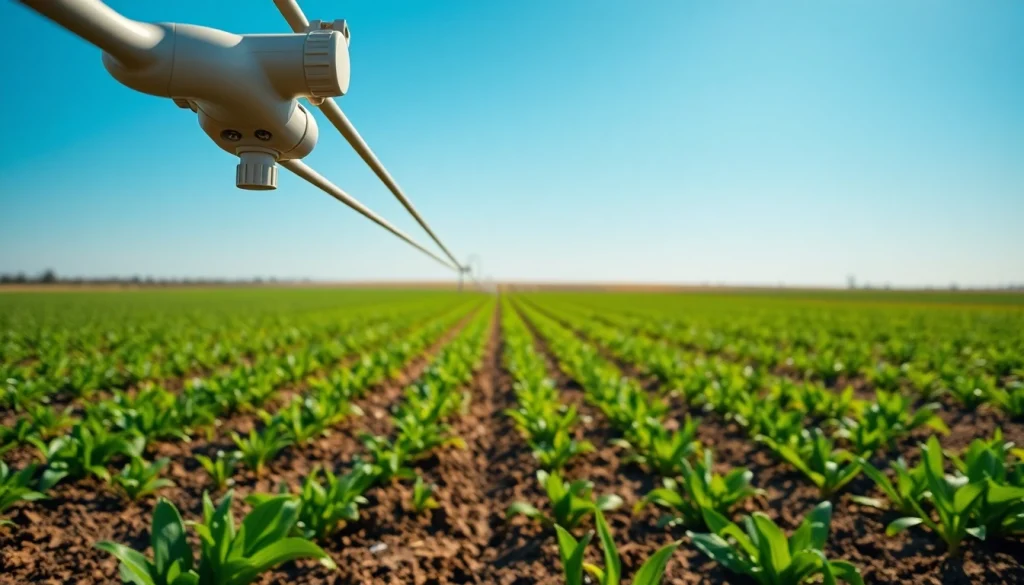
Understanding Land Irrigation Fundamentals
What is Land Irrigation?
Land irrigation is a vital agricultural process, primarily aimed at supplying water to cultivate crops. By artificially delivering water to land areas, irrigation systems enhance soil moisture levels beyond what is provided by natural rainfall. This practice supports crop growth, increases agricultural productivity, and ensures food security. With advancements in technology, the methods of irrigation have evolved, offering more effective, precise, and sustainable options for farmers globally. Recognizing the significance of land irrigation, agricultural stakeholders are increasingly investing in these systems to maximize their yields and optimize resource utilization.
The Importance of Land Irrigation in Agriculture
The role of land irrigation in agriculture cannot be overstated. For areas experiencing insufficient rainfall or unpredictable weather patterns, irrigation serves as a reliable source of water, ensuring that crops receive the moisture necessary to thrive. It enables farmers to cultivate a wider variety of crops, extend growing seasons, and increase overall productivity, contributing significantly to national and global food supplies. Furthermore, effective irrigation practices contribute to better crop quality and yield consistency, which are essential for meeting market demands. Irrigation is not merely about watering plants; it encompasses comprehensive management of water resources to achieve optimal agricultural outcomes.
Types of Land Irrigation Techniques
Understanding the different types of irrigation techniques is essential for optimizing land irrigation effectiveness. The most common methods include:
- Surface Irrigation: Water flows over the surface of the soil, allowing gravity to distribute moisture. This method is cost-effective but can lead to water wastage if not managed properly.
- Drip Irrigation: Water is delivered directly to the root zone of plants through a network of tubing. This highly efficient method minimizes evaporation and runoff, making it ideal for high-value crops.
- Sprinkler Irrigation: Water is sprayed over crops in a manner similar to rainfall, utilizing pumps and pipes. It is versatile and can be adapted to different types of terrain.
- Subsurface Irrigation: Involves placing irrigation tubing below the soil surface, supplying water directly to the root zone. This method reduces evaporation and minimizes surface water runoff.
These techniques each have their strengths and weaknesses, making it crucial for farmers to select methods that best suit their soil types, crop varieties, and local climatic conditions.
Common Challenges in Land Irrigation
Water Scarcity Issues
Water scarcity is one of the primary challenges facing land irrigation today. Poor management of water resources, combined with increased competition for usage from urban areas and industrial sectors, raises concerns regarding the sustainability of irrigation practices. In many regions, groundwater depletion exacerbates the situation, leading to soil degradation and reduced agricultural productivity. Farmers need to adopt better water management practices and invest in technologies aimed at measuring and conserving water use to mitigate these challenges effectively.
Difficulties in Managing Irrigation Systems
Managing irrigation systems can often be complex. Challenges include scheduling irrigation timing, water distribution uniformity, and technical failures of irrigation equipment. These issues can lead to over-irrigation or under-irrigation, causing either waterlogging or drought stress in crops. It’s important to implement systematic maintenance routines, monitor performance metrics, and utilize technology, such as automated irrigation systems paired with sensors, to enhance the efficiency of irrigation management.
Environmental Impact Considerations
Land irrigation can have notable environmental impacts, including the disruption of local ecosystems and biodiversity. Over-extraction of water resources can lead to the drying of rivers and lakes, while irrigation runoff may introduce fertilizers and pesticides into nearby waterways, causing pollution. Moreover, intensive irrigation can result in soil salinization, affecting soil health and crop productivity. Sustainable irrigation practices are essential to minimize these adverse effects, such as employing cover crops and conservation tillage to maintain soil integrity.
Best Practices for Efficient Land Irrigation
Implementation of Smart Irrigation Systems
Technological advancements have introduced smart irrigation systems that utilize sensors and data analytics to optimize water usage. These systems monitor soil moisture levels, weather conditions, and evapotranspiration rates to schedule irrigation more efficiently. Here are several considerations for implementation:
- Invest in soil moisture sensors to provide real-time data on moisture levels.
- Utilize weather forecasts and data analytics to adjust irrigation schedules based on climatic conditions.
- Consider remote management capabilities, allowing for adjustments through mobile devices.
By incorporating smart irrigation systems, farmers can significantly reduce water consumption and improve crop yields through precise water application.
Soil Moisture Monitoring Techniques
Monitoring soil moisture is crucial for managing irrigation effectively. Techniques include:
- Using tensiometers to measure soil moisture tension.
- Employing capacitance or frequency domain sensors to measure water content.
- Regularly measuring plant water stress indicators and correlating them with moisture levels.
By employing these monitoring techniques, farmers can make informed decisions about when and how much to irrigate, promoting more efficient water usage.
Crop Rotation and Its Role in Irrigation
Crop rotation plays a fundamental role in irrigation practices as it influences soil health and moisture retention. By alternating different crops in a specific sequence, farmers can enhance soil nutrient profiles, reduce pest populations, and maintain moisture levels effectively. Key benefits include:
- Improved soil structure leading to better water infiltration.
- Reduced need for supplemental irrigation due to crop diversity.
- Increased resilience against pests and diseases, promoting overall farm sustainability.
Incorporating crop rotation strategies can significantly enhance the efficiency of land irrigation.
Real-World Examples of Successful Land Irrigation
Case Study: Drip Irrigation in Vegetable Farming
Drip irrigation has shown remarkable success in vegetable farming, exemplifying how targeted water application can enhance productivity. A case study in a region with limited rainfall demonstrated that farmers who adopted drip irrigation systems increased their vegetable yields by up to 30%. This method minimized water usage by delivering water directly to the roots, resulting in better plant health and reduced wastage associated with traditional irrigation methods.
Successful Land Irrigation in Dry Regions
In arid regions, innovative land irrigation strategies have transformed agriculture. For example, the use of treated wastewater for irrigation has enabled farmers to cultivate crops in uncontaminated soils while conserving freshwater resources. This approach not only sustains agricultural productivity in dry climates but also helps in managing water scarcity challenges.
Innovative Irrigation Solutions Worldwide
Globally, various innovative solutions have emerged in response to irrigation challenges. In Australia, for example, farmers are increasingly utilizing solar-powered irrigation systems, reducing reliance on traditional power sources while promoting sustainability. Additionally, aquaponics systems, which integrate fish farming with crop cultivation in a single ecosystem, have proven effective in maximizing water efficiency and land productivity.
Measuring the Impact of Land Irrigation
Key Performance Indicators for Irrigation Systems
To assess the effectiveness of land irrigation systems, specific key performance indicators (KPIs) should be monitored:
- Water use efficiency: the volume of water used relative to crop yield.
- Uniformity of water distribution: ensuring adequate moisture levels across all crop areas.
- Soil moisture levels: maintaining optimal levels for crop growth.
Tracking these metrics enables farmers to make informed adjustments and improvements to their irrigation practices.
Long-Term Benefits of Effective Land Irrigation
The long-term benefits of implementing effective land irrigation practices are considerable. Enhanced crop yields contribute to food security, while improved water management reduces operational costs and promotes sustainability. Additionally, efficient irrigation practices help in maintaining local ecosystems and biodiversity, creating balanced agricultural landscapes that benefit both farmers and the environment.
Future Trends in Land Irrigation Technologies
The future of land irrigation is promising, with advancements in technology paving the way for more efficient systems. Emerging trends include:
- The integration of artificial intelligence for predictive analytics in water management.
- Increased adoption of renewable energy in irrigation systems.
- Innovations in soil moisture sensing technology that provide real-time feedback.
These trends indicate a growing emphasis on sustainability, efficiency, and adaptability in land irrigation practices, vital for addressing ongoing challenges in agriculture.
FAQs
What is land irrigation?
Land irrigation refers to the artificial application of water to soil to assist in the growth of crops, enhancing agricultural productivity.
How does land irrigation help in agriculture?
Land irrigation helps ensure crops receive adequate moisture, boosts yield, supports crop variety, and helps manage agricultural challenges like drought.
What are the common types of irrigation methods?
Common irrigation methods include surface, drip, sprinkler, and subsurface irrigation, each with its unique advantages and applications.
How can water scarcity affect irrigation?
Water scarcity can reduce the availability of water for irrigation, impacting crop growth, farm income, and food security in vulnerable regions.
What are smart irrigation systems?
Smart irrigation systems utilize technology to optimize water usage, using real-time data for scheduling and managing irrigation more efficiently.